
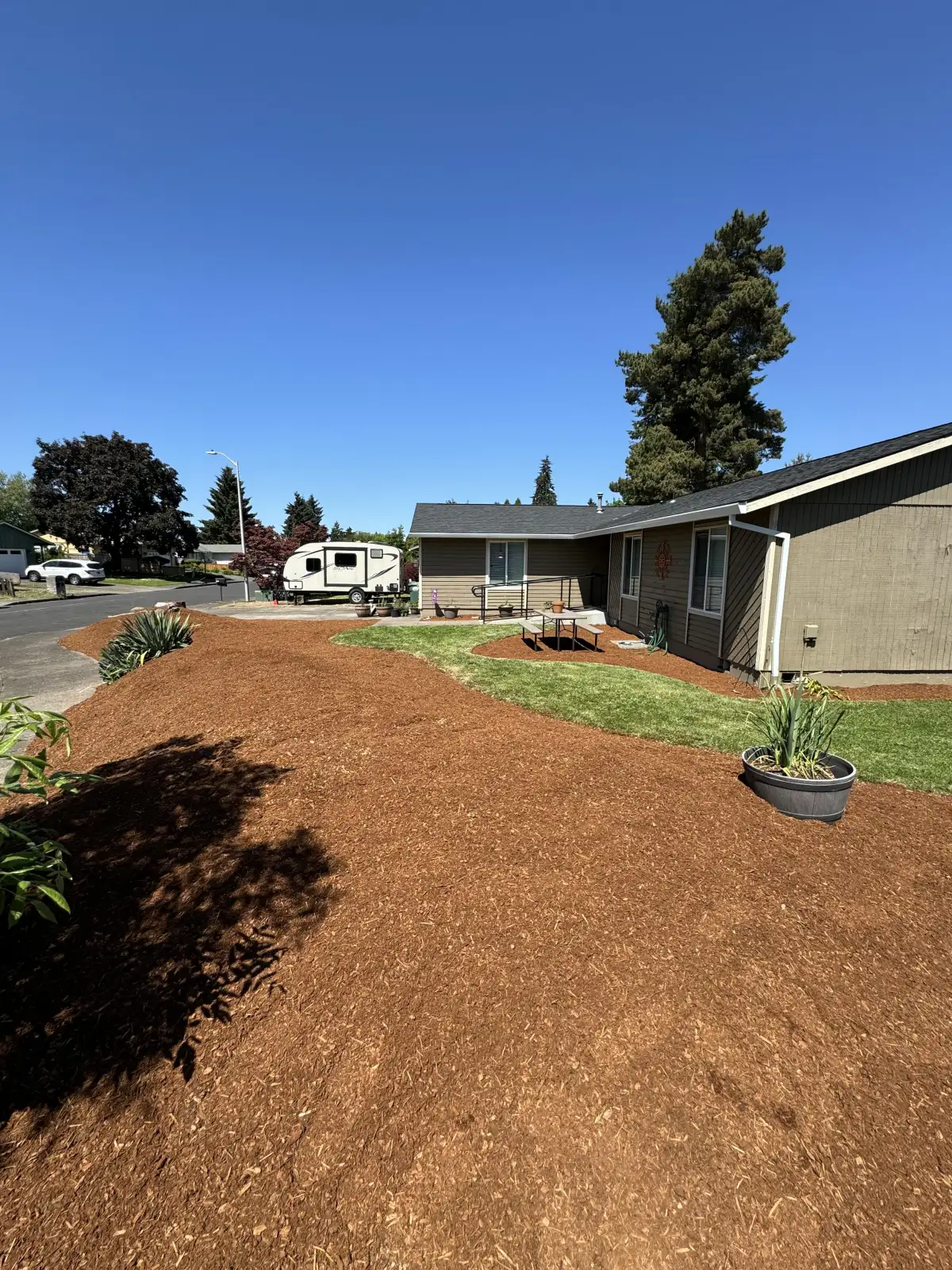
Fresh Beds, Better Moisture Control, Fewer Weeds
CreekView Landscape installs bark mulch, wood chips, compost mulch, and decorative rock for homes across Portland's south suburbs. Mulch is one of the most practical improvements for Oregon landscapes because it protects soil during the dry summer stretch while giving planting beds a clean, finished edge.
A good mulch installation is more than dumping bark over weeds. We prepare the beds first, remove loose debris, define edges, protect plant crowns and tree trunks, and install the right depth for the material. Most ornamental beds perform best with 2 to 3 inches of bark or wood chips. Thin mulch does not suppress weeds well, while overly deep mulch can trap moisture against stems and create pest or disease problems.
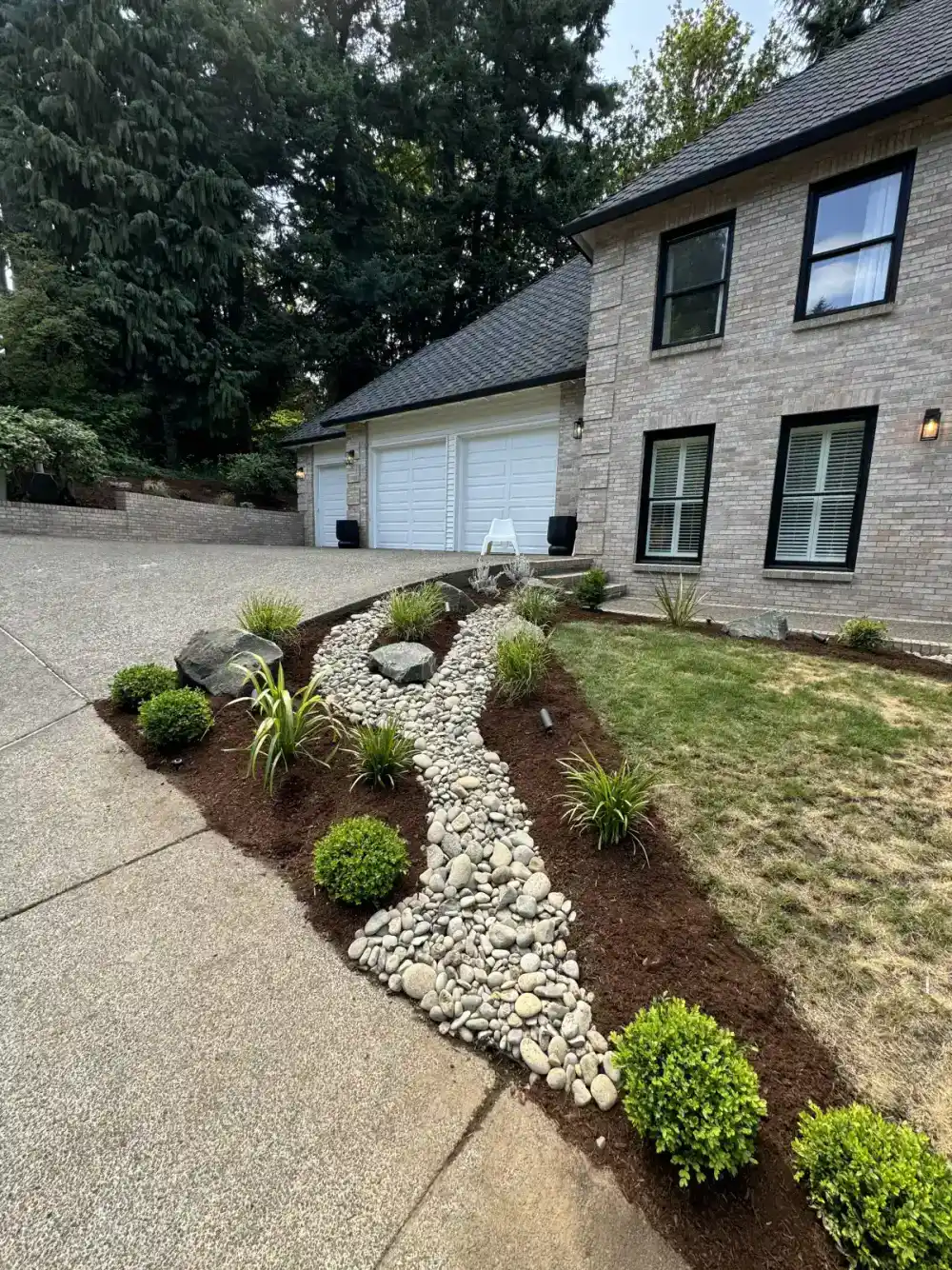
We match the material to the property. Douglas fir bark works well for most Pacific Northwest beds. Hemlock bark gives a darker, more refined appearance. Wood chips can be a practical choice for larger naturalized areas. Decorative rock is better around drainage zones, dry-climate plantings, and some retaining wall edges where organic material would wash or decompose too quickly.
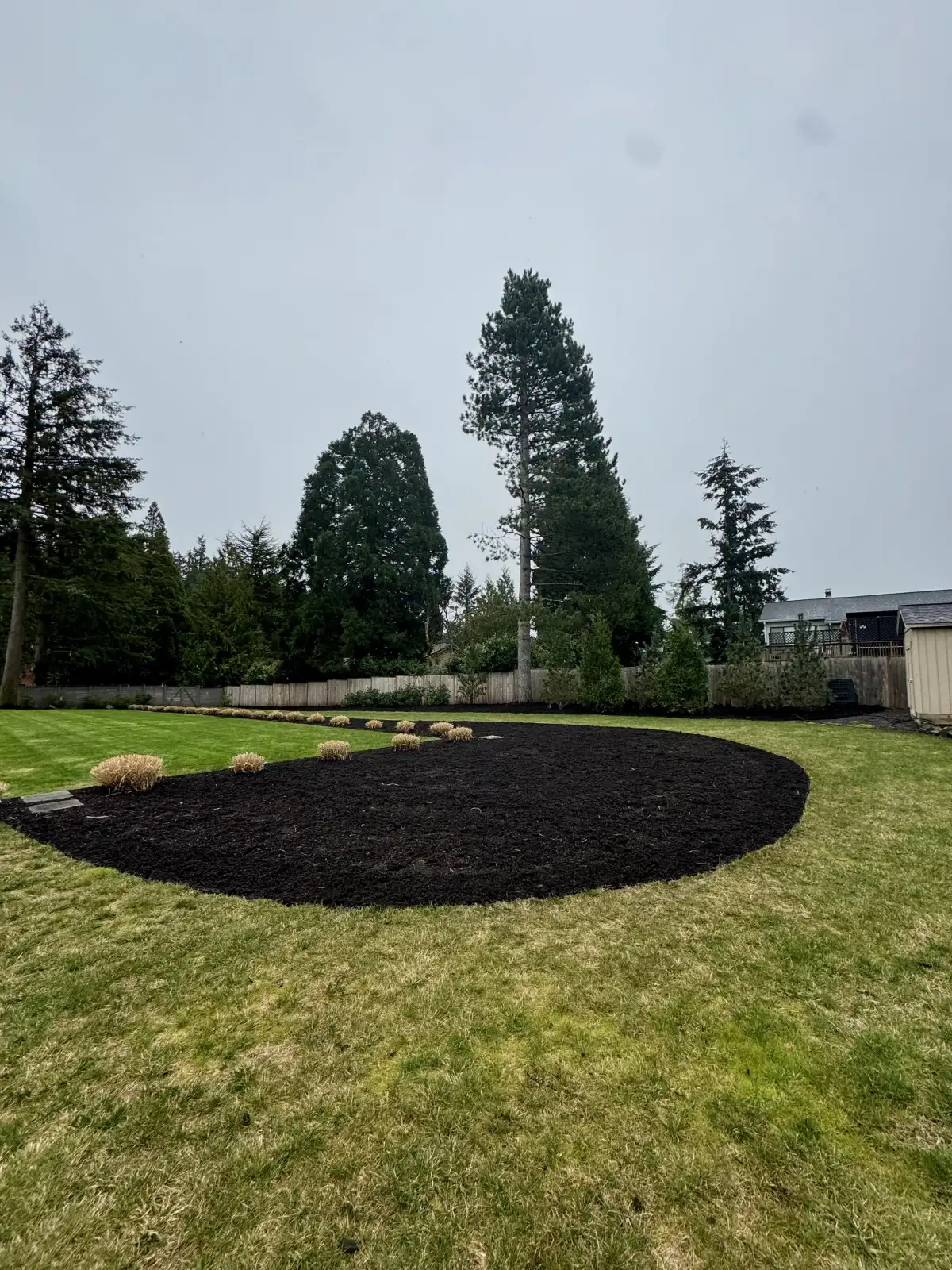
A Better Finish Than Bagged Mulch
Professional mulch installation helps beds look uniform, protects existing plants, and saves the time and mess of hauling dozens of bags from a store. CreekView can provide mulch as a standalone service or as part of landscaping, clean-up, planting, or lawn care work.
Bed Preparation
We remove loose leaves, dead annuals, surface weeds, and debris before spreading new material. Clean prep prevents the new mulch from hiding problems that will come back quickly.
Correct Depth
Most beds receive a consistent 2- to 3-inch layer. We keep mulch away from trunks and stems, taper at edges, and avoid burying low plants or irrigation components.
Material Guidance
We recommend bark, chips, compost, or rock based on slope, drainage, plant type, appearance, budget, and how often you want to refresh the beds.
Clean Finish
After installation, patios, walks, driveways, and lawn edges are blown clean so the property looks finished and ready to use.
When to Mulch in the Willamette Valley
The best timing for most Portland-area beds is late spring through early summer, after the soil has warmed and before the long dry stretch settles in. Mulch installed during this window helps retain spring soil moisture, reduces weed germination, and buffers roots during July and August heat. Fall mulch can also be useful when beds need winter protection or a fresh appearance before heavy rain.
We pay close attention to drainage. Oregon clay soils can stay wet for long periods, especially in shaded yards or low areas. In those situations, mulch depth and material choice matter. Too much fine material can hold moisture at the surface. A coarser bark or a lighter top-up may be better than a thick layer that slows drying.
If your beds are overgrown, we often recommend pairing mulch installation with a yard clean-up first. Removing weeds, leaves, and dead plant material before mulch gives the finished beds a cleaner appearance and helps the new layer perform longer.
Mulch Installation Across Portland's South Suburbs
CreekView installs mulch in Wilsonville, West Linn, Lake Oswego, Sherwood, Tigard, Beaverton, Tualatin, and Happy Valley. Each property gets a site-specific estimate based on bed square footage, material type, access, prep work, and hauling needs. A small front entry refresh may take only a short visit. A full-property bed reset with edging, cleanup, and multiple yards of bark requires more planning and material handling.
Mulch also pairs well with other services. After a paver patio or retaining wall project, fresh beds soften the hardscape and protect new plantings. After turf installation, clean bark edges help separate synthetic turf from ornamental beds. During a full landscaping project, mulch is usually one of the final steps because it gives the space a finished look while protecting the soil under new shrubs and perennials.
What Affects Mulch Installation Pricing
Mulch pricing is based on bed square footage, material type, depth, preparation, access, and delivery requirements. A simple bark top-up over clean beds is straightforward. A full refresh with weed removal, edging, debris hauling, plant trimming, and several cubic yards of material takes more time and planning. We measure the bed areas, check whether old material should stay or be reduced, and confirm where bulk mulch can be dropped without blocking driveways, damaging lawns, or creating extra handling.
Material selection also affects the estimate. Fine bark gives a neat finish but can compact faster in wet locations. Medium bark is a strong all-purpose choice for most ornamental beds. Wood chips are useful in larger naturalized areas and around established trees. Decorative rock usually costs more to install but can last longer in drainage strips, dry planting zones, and areas where bark would wash onto pavers or sidewalks.
How to Make Mulch Last Longer
Mulch lasts longer when the bed is prepared correctly and the edges are maintained. We recommend pulling existing weeds before installation, keeping mulch below siding and away from plant crowns, and refreshing thin areas before bare soil appears. In Oregon, beds near downspouts, shaded fences, and north-facing slopes may need different materials or lighter applications because they stay wet longer. Sunny beds can usually handle a fuller layer because summer evaporation is stronger.
Homeowners can extend the life of a mulch installation by blowing leaves off beds in fall, avoiding aggressive raking that mixes soil into the bark, and topping up only where the layer has thinned. If weeds continue to push through, the issue may be soil disturbance, old weed roots, or an edge problem rather than the mulch itself. CreekView can address those details during lawn care, clean-up, or seasonal maintenance visits.
Ready to Schedule Mulch Installation?
CreekView Landscape provides free on-site estimates across Wilsonville, West Linn, Lake Oswego, Sherwood, Tigard, Beaverton, Tualatin, and Happy Valley.
Get Your Free Estimate