
Summer Mulching Guide: Why Oregon Homeowners Should Mulch Before the Heat
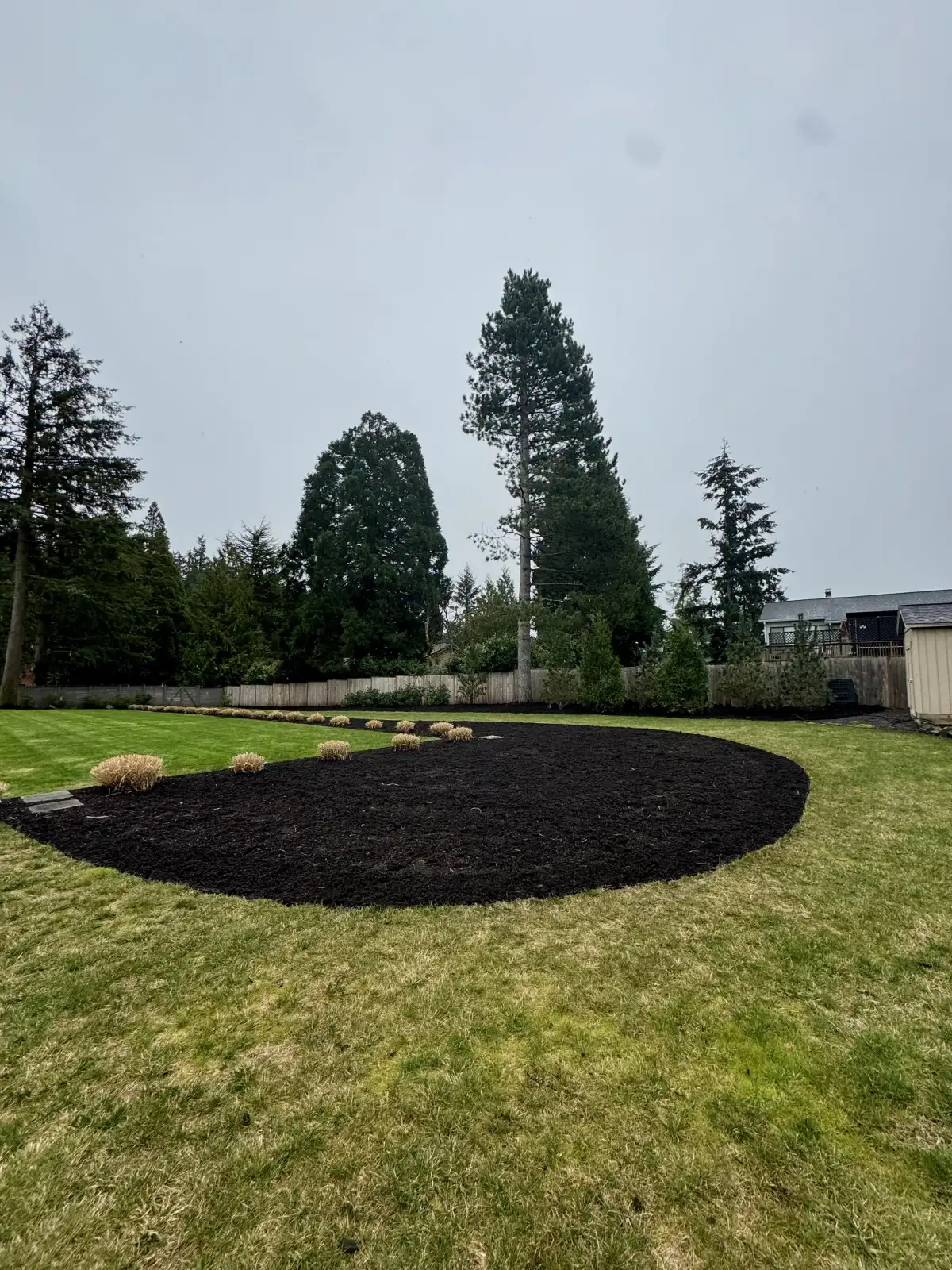
Late May through mid-June is the ideal window to mulch landscape beds in the Portland metro area. The ground has warmed enough for soil organisms to stay active, the spring rains have tapered off, and the dry stretch from July through September is right around the corner. A 2- to 3-inch layer of quality mulch applied now will conserve soil moisture through the driest months, suppress weeds during their peak growing season, and insulate plant roots against the 90-degree-plus days that hit the Willamette Valley every July and August.
This guide covers which mulch types work best for Oregon's climate, how deep to apply them, common mistakes that cause problems, and how mulching fits into a broader summer landscape maintenance plan.
Why Mulching Before Summer Matters in Oregon
Oregon's climate creates a specific challenge for homeowners: eight months of steady rain followed by three to four months of almost no rain at all. The Willamette Valley receives roughly 43 inches of rainfall annually, but less than 3 inches of that falls between July and September. This means the soil moisture that your plants depend on during the hottest months is largely what was stored during spring.
Mulch acts as a barrier between that stored moisture and the sun. Research from Oregon State University's Extension Service shows that a 3-inch layer of organic mulch reduces soil moisture evaporation by 25 to 50 percent compared to bare soil. In practical terms, that means less watering, lower water bills, and plants that are under less drought stress during the critical summer months.
Moisture Retention
Unmulched soil in direct sunlight can reach surface temperatures of 130 degrees or higher on a 95-degree day. At those temperatures, water evaporates rapidly from the top several inches of soil, pulling moisture away from the root zone where plants need it most. Mulch keeps soil surface temperatures 15 to 25 degrees cooler, dramatically slowing evaporation and giving roots consistent access to moisture.
Weed Suppression
Weed seeds need light to germinate. A consistent mulch layer blocks that light, preventing most annual weed seeds from sprouting. Homeowners in Wilsonville, Sherwood, and Tigard who mulch in late May typically see a 70 to 90 percent reduction in summer weed growth compared to unmulched beds. The weeds that do push through mulch are easier to pull because the soil stays loose and moist underneath.
Soil Temperature Regulation
Plant roots are more sensitive to temperature extremes than the above-ground growth you can see. When soil temperatures exceed 85 degrees, root growth slows dramatically in most landscape plants. Mulch buffers these temperature swings, keeping the root zone in the 65- to 80-degree range where most ornamental plants, shrubs, and perennials thrive.
Best Mulch Types for the Portland Metro Area
Not all mulch performs equally in Oregon's wet-then-dry climate cycle. The best options break down slowly, resist compaction, and allow water to penetrate when the fall rains return.
Bark Mulch (Douglas Fir or Hemlock)
Douglas fir bark is the most widely used landscape mulch in the Pacific Northwest, and for good reason. It breaks down slowly (2 to 3 years for medium-grade bark), maintains its structure without compacting into an impermeable mat, and develops a natural, earthy appearance as it ages. Hemlock bark is slightly darker and finer-textured, which some homeowners prefer for a more refined look in formal landscape designs.
- Best for: General landscape beds, around shrubs and trees, slopes
- Depth: 2 to 3 inches
- Refresh rate: Top up annually, full replacement every 2 to 3 years
Wood Chips
Arborist wood chips are an excellent budget-friendly option, especially for larger areas. They decompose faster than bark (1 to 2 years) and add organic matter to the soil as they break down. The downside is that fresh wood chips can temporarily tie up nitrogen in the top inch of soil as they decompose, so they work best around established plants rather than new plantings.
- Best for: Large landscape areas, around established trees, pathways
- Depth: 3 to 4 inches
- Refresh rate: Top up annually
Compost Mulch
A thin layer of finished compost (1 to 2 inches) can serve as both a mulch and a soil amendment, feeding the soil ecosystem while suppressing weeds. This works particularly well for perennial beds and vegetable gardens where you want the organic matter to break down into the soil quickly. Compost mulch is less effective at long-term moisture retention than bark because it decomposes faster.
- Best for: Flower beds, perennial gardens, edible gardens
- Depth: 1 to 2 inches
- Refresh rate: Twice per year (spring and fall)
Rock and Gravel
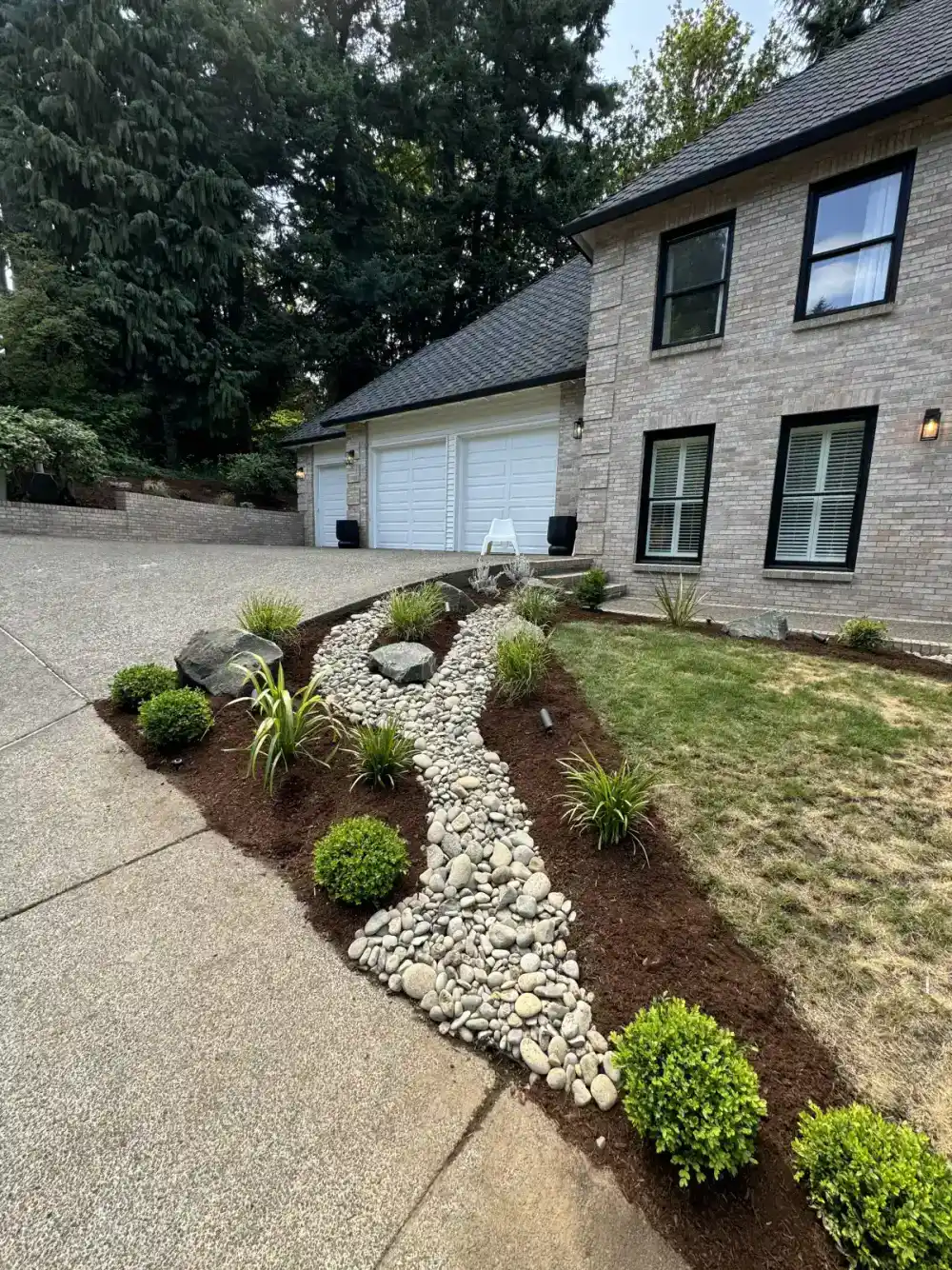
Decorative rock is not technically mulch, but it serves some of the same functions: weed suppression and soil temperature regulation. Rock does not retain moisture the way organic mulch does, and it can actually increase soil temperature by absorbing and radiating heat. In Oregon, rock mulch works best for dry-climate plantings (drought-tolerant or Mediterranean-style gardens) rather than traditional landscape beds.
- Best for: Xeriscape areas, drainage zones, around retaining walls
- Depth: 2 to 3 inches over landscape fabric
- Refresh rate: Rarely needs replacement
How Deep Should You Mulch?
The ideal depth depends on the mulch type, but the general rule for Portland-area landscapes is 2 to 3 inches of organic mulch. Going deeper than 4 inches creates problems:
- Oxygen deprivation: Thick mulch layers restrict air exchange with the soil, starving beneficial soil organisms and plant roots of oxygen.
- Moisture trapping: Paradoxically, too much mulch can trap excessive moisture against plant stems, promoting fungal diseases like root rot, which is already a concern in Oregon's damp climate.
- Pest habitat: Thick, damp mulch layers can become habitat for slugs, which are already one of the most persistent garden pests in the Willamette Valley.
The most common mulching mistake we see at CreekView Landscape is what arborists call "volcano mulching" — piling mulch up against tree trunks and shrub stems. This traps moisture against the bark, creates a pathway for insects and disease, and can kill otherwise healthy plants. Always maintain a 3- to 4-inch gap between mulch and the base of any plant.
When to Mulch: The Oregon Timeline
Timing matters because mulching too early or too late reduces the benefits:
- Late May through mid-June (ideal): Soil is warm, spring weeds have been cleared, and the mulch has time to settle before the July dry stretch. This is when we recommend scheduling lawn care and mulching together for efficiency.
- Early July (acceptable): Still effective but the soil may have already started drying. Water the beds thoroughly before mulching if you are applying in July.
- August or later (less effective): Most of the moisture-retention benefit has already been lost. Mulching this late still helps with weed suppression and aesthetics but delivers less return on the investment.
If you mulched last year and the layer has thinned to less than 1 inch, top it up to the full 2- to 3-inch depth now. You do not need to remove the old mulch first — partially decomposed mulch is actively feeding the soil and should stay in place.
How Much Mulch Do You Need?
Mulch is sold by the cubic yard. One cubic yard covers approximately 162 square feet at 2 inches deep, or 108 square feet at 3 inches deep. Here is a quick reference for common landscape bed sizes in Portland-area residential properties:
- Small front bed (100 sq ft): 1 cubic yard at 3 inches deep
- Standard front and side beds (300 sq ft): 3 cubic yards
- Full property perimeter beds (600 sq ft): 6 cubic yards
- Large property with island beds (1,000+ sq ft): 10+ cubic yards
Delivery is typically more cost-effective than bagged mulch once you exceed 2 cubic yards. Most landscape supply yards in the Portland area will deliver to driveways in Wilsonville, West Linn, Lake Oswego, Sherwood, Tigard, Beaverton, Tualatin, and Happy Valley.
Mulching as Part of a Summer-Ready Landscape
Mulching delivers the most value when it is part of a complete summer preparation plan rather than an isolated task. The ideal sequence for getting your Portland-area landscape summer-ready is:
- Spring cleanup: Remove dead growth, clear debris from beds, edge borders
- Weed removal: Pull or spot-treat existing weeds before mulching (mulch suppresses new weeds but will not kill established ones)
- Pruning: Shape shrubs and remove dead wood before covering the bed with fresh mulch
- Irrigation check: Test your irrigation system, adjust heads, and repair any leaks before mulch covers the emitters
- Mulch application: Apply 2 to 3 inches of quality bark or wood chips
- Deep watering: Water the mulched beds thoroughly to settle the material and start the moisture-retention cycle
If you are also planning a patio installation or turf project this summer, coordinating the mulching with that work avoids double-handling materials and keeps the overall project cleaner.
Get Your Landscape Summer-Ready
CreekView Landscape provides professional mulch installation and complete landscape maintenance across Wilsonville, West Linn, Lake Oswego, Sherwood, Tigard, Beaverton, Tualatin, and Happy Valley. We source premium Douglas fir bark from local suppliers, apply it at the correct depth, and maintain proper clearance around all plant bases.
The late-May window is ideal. Let us get your beds mulched before the summer heat arrives.
Or call us at (971) 983-6455.
About CreekView Landscape
CreekView Landscape LLC is a locally owned landscaping and hardscaping company based in Woodburn, Oregon. Founded in 2024, the team specializes in paver patios, retaining walls, turf installation, and complete backyard remodels serving homeowners across Portland's south suburbs.